

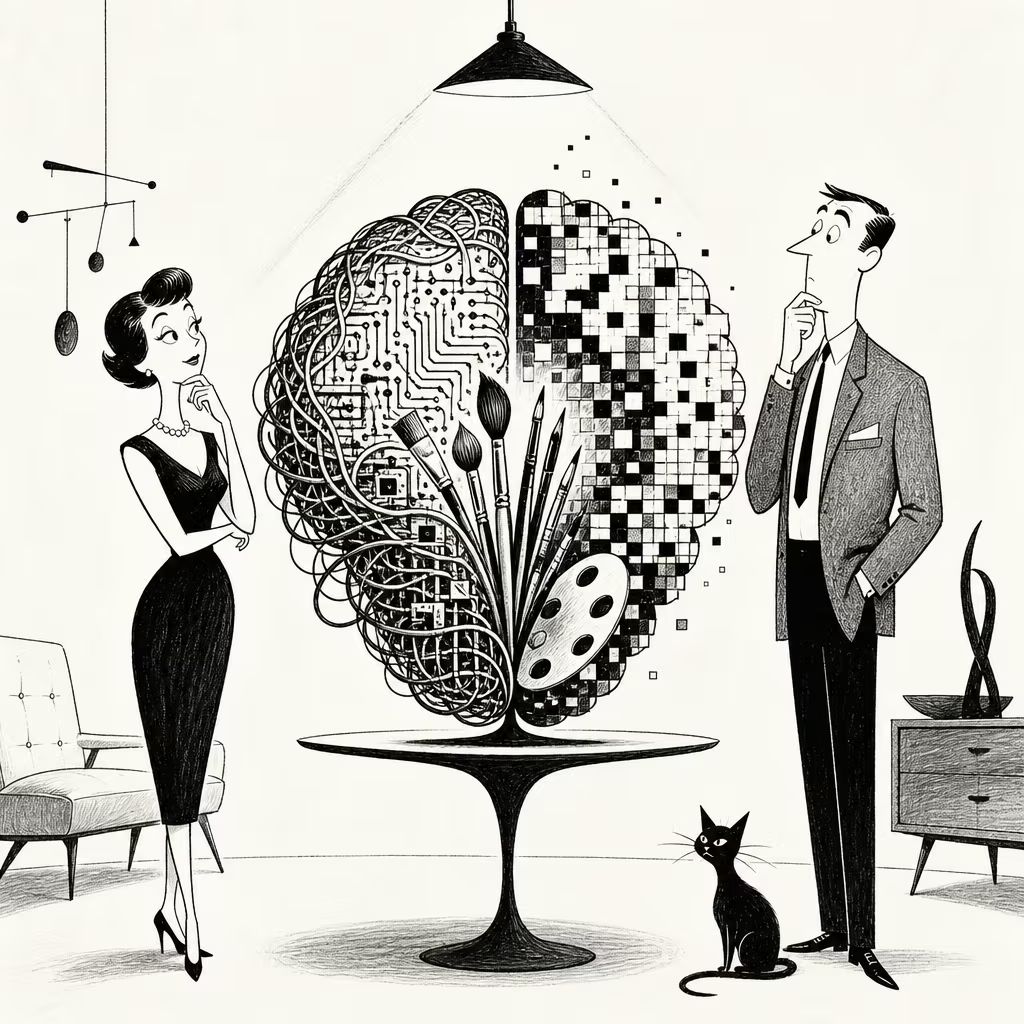
A thoughtful couple contemplates the evolving intersection of creativity and technology, symbolized by a brain merging artistic tools with digital circuitry under a spotlight.
I was browsing topics and titles on bubbles.town when I came across a post by Panagiotis Vryonis, AI-generated blog post images are not cool any more. It reminded me of another post I read a few months ago, On AI Images and Feature Images in General by Kev Quirk. I have been meaning to respond to his piece.
Last year, I wrote a post about using featured images called To Feature Image or Not. That post surprised me by getting a couple of responses. I usually get almost no feedback, so the email replies were unexpected.
The readers who responded basically said the same thing: It is your blog. You can use featured images if you want.
When I first started using Blogger back in 2001, finding images for posts was a real chore. You had to search for them manually while being careful not to use someone else’s image from their site without permission. Using pictures was not very convenient.
I later used WordPress for quite a few years. During my last couple of years with it, I learned that it had a featured-image function and started using it.
Two things almost always draw me in when I am deciding whether to read something, even though I know they probably should not: the title and an image that goes with it. That seems to be true for most people I know. Not everyone, but most.
Then AI came along and made it easy and affordable to create an image from a prompt. I could describe what I wanted, or I could say, “Read this blog post and provide me with an image.”
That was amazing to me because I really like having featured images.
I compare this to using Typora to help write my blog posts. I also had AI help me create a homegrown program that formats, edits, and publishes posts to several blogs at the same time. I designed a featured-image routine as part of that program.
I still create and shape the post. The thoughts, opinions, and meaning are mine. AI acts more like an editor. It helps make sure the post is formatted correctly for publishing, and it creates the featured image.
Vryonis writes:
But AI-generated images in blog posts are no longer cool. Everyone does it. And with the exception when an image is a really good fit, it looks like a 2000 PowerPoint using animated transitions and WordArt.
I disagree. Some of the images AI creates look fantastic. Many of them seem unique to me, although I admit that I am not an art expert.
He advocates using an Open Graph card style, like the type of card you might see when a link is shared on social media. It could include the post title, summary, date, tags, and blog name. That is certainly one way to present a post, but I still prefer a featured image.
Kev Quirk, as usual, takes something closer to the middle road, which is where I tend to be as well.
He writes:
Like I said in my previous post about AI, I don't think it creates art, but it can be useful for diagrams and some imagary. I listed some examples of my usage in that post, go take a look.
He continues:
For feature images, I think it's fine, I suppose. I don't think it has a bearing on the writer's ability to write good content thought. I think most people can spot AI-generated prose these days. If my spider-sense starts tingling, I'll close the tab. But if I only see an AI-generated feature image, it's fine.
I agree with that distinction. An AI-generated featured image does not determine whether someone is capable of writing good content.
Gordon McLean of Happily Imperfect makes a similar point in his post When is AI image slop ok?.
He writes:
I have also been using AI to create the featured image for many of my posts here. I like having a featured image, I think from a purely visual point of view it helps make the blog post look better.
That sums up much of my position.
I do not understand why an AI-generated featured image automatically turns some people away. As long as the author of the blog post is a human, what is wrong with using AI to help create the image?
In his post, Gordon mentions reconsidering his use of AI images after reading Rhys Wynne’s Your crap is more memorable than your slop.
Rhys’s main argument is about AI-generated posters and designs. He believes imperfect human creations can be more distinctive and memorable than polished but generic AI-generated material. He also applies that concern to blogs, suggesting that AI-generated featured images may make readers question how much of the rest of the post was created by a person.
I understand that concern, but I do not think one necessarily follows the other.
Using AI to create an image does not prove that the words were also written by AI. A lack of artistic ability does not mean someone lacks creativity in every other area.
Someone may be a talented writer while having little ability to draw, paint, take photographs, or design graphics (personally I don't think I am any of them). As Kev says, a lack of creativity or skill in one area does not prove a lack of creativity in another.
I can tell you firsthand that the two do not always go together.
I am generally pro-AI, although I would not call myself an AI apologist. I think AI has useful purposes, and I believe it makes certain things more accessible to people like me. I like this democratization.
I am also upfront about what I do and do not use AI for. That is all I can reasonably ask from another blogger. Tell me how you use it, particularly when it has played a major role in creating what I am reading.
When I can hire a human, I do. I hired a contractor through Fiverr to create the avatar I use on certain social-media platforms and websites. When I want that human quality and can afford it, I am willing to pay a human creator.
Paying someone to make a new featured image for every blog post would be a different matter. If I post frequently, I could not afford to commission a human artist for every article.
Without AI, I probably would not replace those images with commissioned artwork. I would simply stop using featured images.
I do think we need controls on AI. Just because an AI can do something does not mean it should.
If we eventually let AI do everything, what will people do?
We have not yet reached the Star Trek ideal of a society where no one needs money, everyone has access to the same basic necessities, and people are free to pursue exploration, knowledge, and personal growth.
Even in Star Trek, computers are generally meant to augment and assist human beings, not replace them or make humanity unnecessary.
The danger comes when greed enters the picture.
Companies may try to use AI to replace as many people as possible, but they have to walk a fine line. If AI does everything, or almost everything, and most people no longer have jobs or money, who will be able to buy what those companies are selling?
Taken far enough, that could set the stage for a deadly future for human beings.
Here is some final food for thought.
At what point will AI be able to write entire blog posts without readers being able to tell?
Today, we can often recognize certain AI habits and patterns. There are still tells. Over the next few years, those systems will probably improve. Eventually, readers may not know whether a post was written by a person unless the author discloses it.
Will it even matter if the information or point of view in the post is one we agree with or one that confirms our own biases? Or will what matters most be whether it is factually correct, clearly presented, easy to understand, and able to survive a fact-check?
When that time comes, the featured image may be the least important part of the discussion.
Comments
Post a Comment